


When comparing rosemary oil vs castor oil for hair, you might wonder which one is better for hair growth, thickness, and overall scalp health. Both oils are popular in natural hair care, but they work differently. Rosemary oil is often used to support hair growth and scalp health, while castor oil is known for its thick texture, moisturizing properties, and ability to help hair feel softer.
If you are dealing with hair thinning, dryness, breakage, or slow-growing hair, choosing the right oil can make your hair care routine more effective. The best option depends on your hair type, scalp condition, and what you want to achieve.
In this guide, we will compare rosemary oil and castor oil, explain their benefits, discuss their differences, and help you decide which one may work best for your hair.
What Is Rosemary Oil?

Rosemary oil is an essential oil extracted from the rosemary plant. It has become popular in hair care because some research suggests that it may help with certain types of hair loss. It is also commonly used in scalp massage and hair oiling routines.
Unlike heavier oils, rosemary essential oil is concentrated and should not be applied directly to your scalp without dilution in a carrier oil.
Benefits of Rosemary Oil for Hair
1. May support hair growth
Rosemary oil is often used by people who want to improve hair thickness and reduce thinning. One small study compared rosemary oil with 2% minoxidil over six months in people with androgenetic alopecia and found improvements in hair count in both groups. However, more research is needed to confirm its effectiveness.
2. Supports scalp care
A healthy scalp is important for maintaining healthy hair. When properly diluted, rosemary oil may be a useful addition to a scalp massage routine.
3. Lightweight compared with castor oil
Rosemary essential oil is concentrated, so only a small amount is needed. When mixed with a lightweight carrier oil, it can be suitable for people who dislike heavy products.
4. May help reduce the appearance of thinning
With regular scalp care, some people find rosemary oil helpful as part of their hair-thinning routine. However, results vary, and it is not a guaranteed treatment for hair loss.
Who Should Use Rosemary Oil?
Rosemary oil may be worth considering if you:
- Want to support hair growth and scalp health.
- Have concerns about hair thinning.
- Prefer a lightweight oiling routine.
- Want to include scalp massage in your hair care routine.
If you have a sensitive scalp, test a properly diluted mixture on a small area first. Stop using it if you experience burning, itching, or irritation.
What Is Castor Oil?
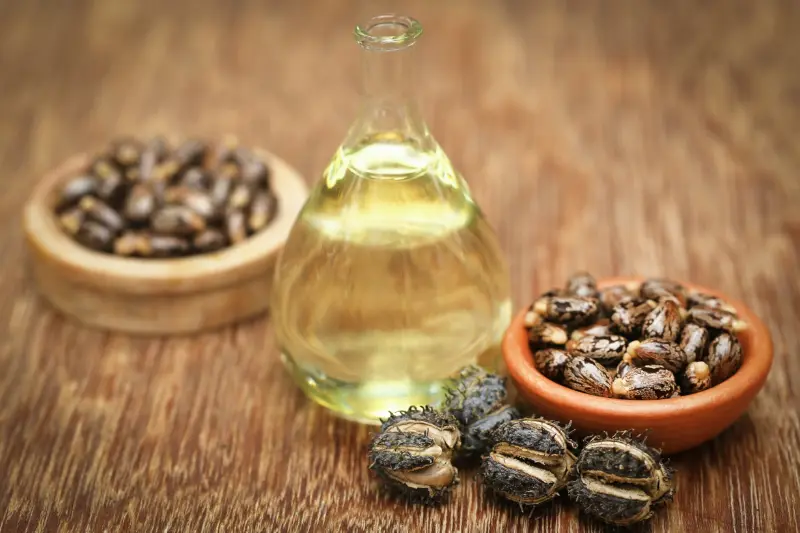
Castor oil is a thick vegetable oil extracted from castor seeds. It is widely used in hair care because it helps lubricate the hair strands and reduce moisture loss.
Unlike rosemary essential oil, castor oil is a carrier oil. It can generally be applied directly to the hair, although its thick consistency may not suit every scalp.
Benefits of Castor Oil for Hair
1. Helps soften dry hair
Castor oil coats the hair strands, helping them feel smoother and less rough. This can be useful if your hair is dry, coarse, or difficult to manage.
2. Helps reduce friction and breakage
Applying a small amount of castor oil to the lengths and ends of your hair may reduce friction during brushing and styling. This can help minimize breakage, although it does not guarantee faster hair growth.
3. Adds shine
If your hair looks dull, a small amount of castor oil may give it a smoother, shinier appearance.
4. Helps protect the hair lengths
Castor oil creates a coating on the hair that can help reduce moisture loss. This is especially useful for dry ends, but using too much can leave your hair greasy and difficult to wash.
Who Should Use Castor Oil?
Castor oil may be a good choice if you:
- Have dry or coarse hair.
- Experience breakage and rough ends.
- Want your hair to look smoother and shinier.
- Prefer a rich oil for pre-wash treatments.
- Need extra lubrication for your hair lengths.
Keep in mind that there is limited scientific evidence that castor oil directly stimulates hair growth or increases hair density.
Rosemary Oil vs Castor Oil for Hair: Key Differences
Let’s compare both oils to make your decision easier.
| Feature | Rosemary Oil | Castor Oil |
| Main purpose | Scalp care and potential hair-growth support | Conditioning and reducing friction |
| Hair growth evidence | Limited but promising research | Insufficient evidence |
| Texture | Essential oil; concentrated | Thick and sticky |
| Best suited for | Scalp-focused routines | Dry hair and hair lengths |
| Moisturizing effect | Depends on the carrier oil used | Helps reduce moisture loss |
| Hair shine | Depends on the mixture | Can add noticeable shine |
| Breakage protection | Indirect potential benefit | May reduce friction |
| Application | Must be diluted before scalp use | Can be applied sparingly |
| Best use | Diluted scalp massage | Pre-wash treatment or small amounts on ends |
The main difference: Rosemary oil is more commonly used for scalp-focused hair-growth routines, while castor oil is primarily useful for conditioning the hair and helping it feel smoother.
Neither oil is proven to work for everyone.
Which Oil Is Better for Hair Growth?
If your main goal is hair growth, rosemary oil may be the more promising option because it has some human research supporting its potential benefits for certain types of hair loss.
However, you should understand that the evidence is still limited. Rosemary oil is not a guaranteed replacement for established hair-loss treatments, and the cause of your hair loss matters.
Castor oil can help your hair look healthier by reducing dryness and friction, but there is no strong clinical evidence that it directly increases the rate of hair growth.
If you are experiencing sudden, severe, or persistent hair loss, consider consulting a dermatologist to identify the cause before relying on oils.
Which Oil Is Better for Hair Thickness?
The answer depends on what you mean by thickness.
Rosemary oil may be worth trying if you are concerned about thinning at the scalp. Some early research suggests it could help with hair density in certain circumstances, but stronger studies are needed.
Castor oil can make individual strands feel smoother and appear shinier because it coats the hair. This may give your hair a fuller-looking appearance temporarily, but it does not necessarily make each strand grow thicker.
If your hair looks thin because of breakage and dry ends, castor oil may be useful. If you are concerned about gradual thinning at the roots, rosemary oil may be more relevant to explore.
Rosemary Oil vs Castor Oil for Dry Hair
If you have dry hair, castor oil is usually the more practical choice.
Its thick texture helps coat the hair, smooth rough strands, and reduce friction. You do not need to apply a lot to see a conditioning effect.
Rosemary essential oil is not primarily a moisturizing oil. If you want to use it on dry hair, mix it with a carrier oil such as jojoba or coconut oil.
For best results, apply a small amount of castor oil to your mid-lengths and ends before washing your hair. Leave it on for around 30 minutes, then shampoo thoroughly.
You can also use a regular conditioner after shampooing to improve softness and manageability.
You may also like to read this:
Olaplex No 3 Hair Perfector Review: Is It Worth It?
Loreal Elvive Dream Lengths Review: Honest Verdict
Shea Moisture Curl Shampoo Review: Is It Worth Buying?
Garnier Hair Food Mask Review: Benefits and Results
Coconut Oil vs Argan Oil for Hair: Which Is Better?
Can You Mix Rosemary Oil and Castor Oil?
Yes, you can mix rosemary essential oil with castor oil. In fact, combining them may be useful if you want to include scalp care and hair conditioning in the same routine.
Castor oil is thick, so mixing it with a lighter carrier oil can make the blend easier to spread and wash out.
How to Make a Rosemary and Castor Oil Blend
Here is a simple method you can try:
Ingredients:
- 1 tablespoon of castor oil.
- 2 tablespoons of jojoba or coconut oil.
- Rosemary essential oil at a safe, product-appropriate dilution.
Directions:
- Mix the castor oil with the lighter carrier oil.
- Add rosemary essential oil according to the product’s dilution instructions. A conservative starting concentration for adults is around 1%, provided the product label permits it.
- Mix thoroughly.
- Apply a small amount to your scalp and gently massage without scratching.
- Leave it on for 30 minutes before washing it out.
Do not apply undiluted rosemary essential oil to your scalp. Patch-test the mixture before wider use, and avoid using it on irritated or broken skin.
If you notice redness, itching, or burning, wash it off and discontinue use.
How Often Should You Use Rosemary Oil or Castor Oil?
The ideal frequency depends on your scalp, hair texture, and how well you tolerate each product.
Rosemary Oil
Start with a properly diluted mixture once or twice a week. Monitor your scalp for irritation before considering more frequent use.
Consistency may matter if you are using it to support hair growth, but avoid assuming that more oil will produce faster results.
Castor Oil
For dry hair, try castor oil once a week as a pre-wash treatment. Apply a small amount to your hair lengths and ends, especially if your hair is prone to breakage.
If your scalp becomes greasy, itchy, or uncomfortable, reduce the amount or stop applying it to your scalp.
Rosemary Oil vs Castor Oil for Different Hair Types
Your hair type can help you decide which oil to choose.
For Fine Hair
Rosemary oil diluted in a lightweight carrier oil may be easier to manage. Castor oil can weigh fine hair down, making it look flat or greasy.
For Curly Hair
Castor oil may help lubricate curls, smooth rough ends, and reduce friction. Rosemary oil can be used in a diluted scalp treatment if you want to focus on scalp care.
For Thick or Coarse Hair
Castor oil may work well as a pre-wash treatment because thicker hair can sometimes tolerate richer products. Use enough to coat the hair lightly rather than saturating it.
For an Oily Scalp
Avoid applying large amounts of heavy castor oil directly to your scalp. A lightweight, properly diluted rosemary mixture may be more comfortable, but discontinue it if it causes irritation or worsens scalp symptoms.
For a Dry, Flaky Scalp
First, determine whether the flakes are caused by dryness, dandruff, or another scalp condition. Oils may not treat the underlying problem, and some products can worsen irritation. A suitable anti-dandruff treatment may be more effective when dandruff is the cause.
How Long Does It Take to See Results?
The time needed to see results depends on your goal.
- Hair softness: You may notice a difference after the first application of castor oil.
- Hair shine: This may improve immediately after conditioning.
- Hair breakage: Reduced friction may help over several weeks if you also handle your hair gently.
- Hair growth: If rosemary oil helps your particular condition, visible changes may take several months. Research has examined outcomes over six months, and results are not guaranteed.
Remember that hair naturally grows slowly. Take photos under similar lighting every month rather than checking for changes every day.
If you are experiencing significant hair loss, an oiling routine alone may not address the underlying cause.
Common Mistakes to Avoid When Using Hair Oils
Even natural oils can cause problems if you use them incorrectly. Keep these tips in mind:
- Do not apply undiluted rosemary essential oil directly to your scalp.
- Avoid using excessive castor oil because it can be difficult to remove.
- Do not assume that oil automatically makes hair grow faster.
- Avoid aggressive scalp massage, especially if your scalp is sensitive.
- Do not ignore persistent itching, redness, scaling, or unusual hair shedding.
- Avoid mixing multiple new products at once, as this makes it harder to identify the cause of irritation.
A simple routine that suits your hair is usually better than applying too many products.
Final Verdict: Rosemary Oil vs Castor Oil for Hair
When comparing rosemary oil vs castor oil for hair, the best choice depends on your needs.
Choose rosemary oil if you want to focus on scalp care and explore an option with limited but promising evidence for certain types of hair loss. Always dilute rosemary essential oil before applying it.
Choose castor oil if your main concern is dry hair, rough ends, shine, or breakage caused by friction. It can help condition your hair, although it is not proven to stimulate new growth.
You can also use both oils in one routine, provided you dilute the rosemary oil appropriately and avoid applying excessive amounts.
Ultimately, healthy hair depends on more than oil alone. Gentle washing, conditioning, adequate nutrition, and identifying the cause of hair loss can make a bigger difference than choosing a single product.
Frequently Asked Questions
1. Is rosemary oil better than castor oil for hair growth?
Rosemary oil has limited clinical evidence suggesting potential benefits for certain types of hair loss. Castor oil lacks strong evidence for directly stimulating hair growth. Neither oil guarantees results.
2. Can castor oil make hair thicker?
Castor oil can coat the hair strands, helping them look smoother and shinier. This may create the appearance of fuller hair, but it has not been proven to increase hair density.
3. Can I use rosemary oil and castor oil together?
Yes. You can combine rosemary essential oil with castor oil and a lighter carrier oil. Ensure the rosemary oil is properly diluted, and patch-test the mixture first.
4. Which oil is better for hair fall?
Rosemary oil may be worth considering for certain types of hair thinning, but hair fall can have many causes, including nutritional deficiencies, hormonal changes, stress, and medical conditions. Identifying the cause is important.
5. Is castor oil good for dry hair?
Yes. Castor oil can help coat dry hair, improve smoothness, and reduce friction. Because it is thick, start with a small amount and wash it out thoroughly.



[…] Rosemary Oil vs Castor Oil for Hair: Which Is Better? […]
[…] You may also like to read this:Rosemary Oil vs Castor Oil for Hair: Which Is Better? […]