
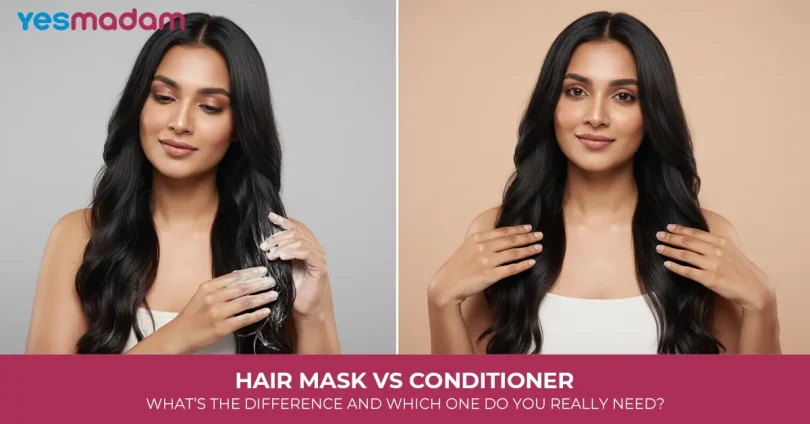

When comparing hair mask vs deep conditioner, you might wonder which product your hair really needs. Both products help improve softness, manageability, and moisture, but they are not always the same. A hair mask is often designed to provide more intensive care, while a deep conditioner focuses on improving hydration, softness, and overall hair condition. However, their benefits can overlap depending on the formula.
If you are dealing with dry, frizzy, damaged, or tangled hair, choosing the right product can make your hair care routine much easier. In this guide, we will explain the differences between hair masks and deep conditioners, their benefits, how to use them, and which option may work best for your hair type.
What Is a Hair Mask?

A hair mask is a hair care treatment designed to address specific concerns, such as dryness, frizz, breakage, roughness, or a lack of shine. Many hair masks contain conditioning agents, oils, fatty alcohols, proteins, and other ingredients that help improve the appearance and feel of your hair.
Think of a hair mask as an extra step in your hair care routine when your hair needs more attention than your regular conditioner provides.
Benefits of Hair Masks
Hair masks can offer several benefits depending on their ingredients and formulation.
- Improves softness: Helps make rough hair feel smoother and easier to manage.
- Reduces frizz: Conditioning ingredients can help smooth the hair surface and improve manageability.
- Adds shine: Hair may look healthier and shinier after treatment.
- Helps with dry hair: Moisturizing formulas can make dry strands feel softer.
- Supports damaged hair: Certain formulas help reduce friction, tangling, and breakage caused by grooming.
- Provides targeted care: Some masks focus on moisture, while others contain proteins or ingredients designed for color-treated hair.
Remember that a hair mask cannot permanently repair split ends or completely reverse severe hair damage. Its results depend on the formula and the condition of your hair.
How Often Should You Use a Hair Mask?
For many people, using a hair mask once a week is a reasonable starting point. If your hair is extremely dry, curly, coarse, or chemically treated, you may benefit from using one more frequently if the product directions allow it.
If your hair is fine or becomes greasy quickly, start with less frequent use and apply the mask mainly to your mid-lengths and ends.
What Is a Deep Conditioner?
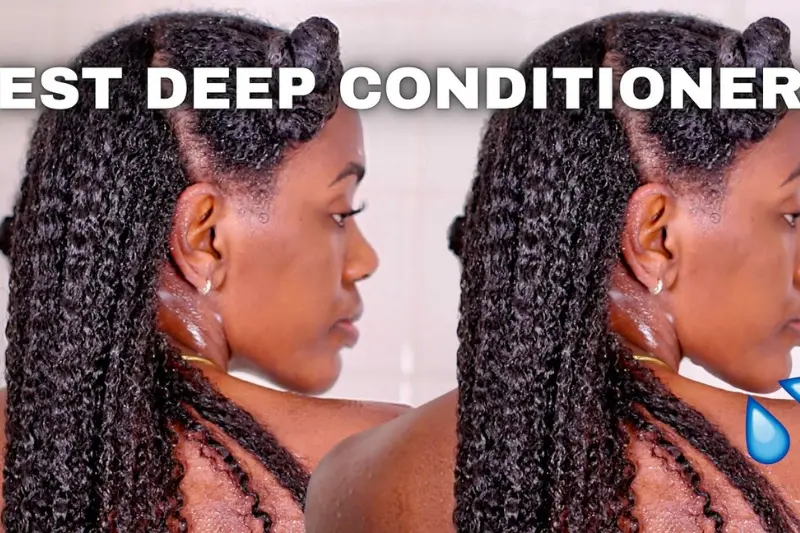
A deep conditioner is a conditioning treatment that helps improve hair softness, hydration, smoothness, and manageability. Compared with a basic rinse-out conditioner, it is generally formulated for more intensive conditioning.
Deep conditioners often contain ingredients such as fatty alcohols, conditioning agents, oils, and humectants. These ingredients help soften the hair, reduce tangling, and make it easier to comb.
Deep conditioning is especially useful when your hair feels dry after shampooing, tangles easily, or needs extra softness.
Benefits of Deep Conditioners
Deep conditioners can help improve your hair in several ways.
- Boosts softness: Leaves hair feeling smoother and more manageable.
- Improves moisture retention: Some formulas help hair retain water or reduce moisture loss.
- Makes detangling easier: Reduces friction between strands, making combing easier.
- Helps control frizz: Smooths the hair surface and improves the appearance of unruly strands.
- Reduces grooming-related breakage: Easier detangling can reduce unnecessary pulling and snapping.
- Supports regular hair care: Helps maintain a softer feel between washes.
Deep conditioners are available for different hair types, including fine, thick, curly, coily, color-treated, and chemically processed hair.
How Often Should You Use a Deep Conditioner?
Many people use a deep conditioner once a week or every one to two weeks, depending on their hair’s needs and the product instructions.
If your hair is dry or curly, you may need conditioning treatments more often. If your hair is fine or easily weighed down, use a lightweight formula and avoid applying too much product near your roots.
Hair Mask vs Deep Conditioner: Key Differences
Although these products can perform similar functions, their intended purposes and formulas may differ.
| Feature | Hair Mask | Deep Conditioner |
| Main purpose | Targeted or intensive hair treatment | Intensive conditioning and softness |
| Common benefits | Moisture, smoothness, shine, or targeted repair claims | Hydration, detangling, softness, and manageability |
| Formula | Varies from lightweight to rich | Varies from lightweight to rich |
| Treatment time | Depends on product directions | Depends on product directions |
| Frequency | Often weekly or as needed | Often weekly or every one to two weeks |
| Best for | Specific hair concerns | Regular maintenance of hair condition |
One important thing to understand is that a hair mask is not automatically stronger than a deep conditioner. Some masks are essentially rich conditioners, while some deep conditioners provide very intensive treatment. The ingredients, concentration, and directions matter more than the product name.
Hair Mask vs Deep Conditioner: Which Is Better?
The better choice depends on what your hair needs. Instead of choosing a product simply because it has a particular label, look at your main hair concern.
Choose a Hair Mask If Your Hair Is Very Dry
If your hair feels rough, looks dull, or becomes difficult to manage, a moisturizing hair mask may help. Look for conditioning ingredients and emollients that help soften the hair.
A rich mask may be particularly helpful for coarse, curly, or coily hair that needs additional conditioning. However, fine hair may respond better to a lighter formula.
Choose a Deep Conditioner If Your Hair Needs Regular Moisture
If your hair becomes tangled after washing or feels dry between washes, a deep conditioner may be the better choice.
It can help improve softness and make detangling easier without requiring you to add several different treatments to your routine.
Choose a Hair Mask for Damaged Hair
If you frequently use heat styling tools, bleach, or hair color, a mask formulated for damaged hair may help improve smoothness and reduce breakage during grooming.
Look for products specifically formulated for chemically treated or damaged hair. Some contain proteins or bond-supporting ingredients, while others focus mainly on conditioning.
Keep in mind that damaged hair cannot be fully restored to its original state by a mask alone.
Choose a Deep Conditioner for Curly Hair
Curly and coily hair often benefits from consistent conditioning because curls can tangle easily and may feel dry.
A deep conditioner can help soften curls, improve slip, and make detangling easier. A hair mask can also work well, particularly if your curls are coarse or heavily processed.
Choose the product that leaves your curls soft and manageable without making them feel coated or heavy.
You may also like to read this:
Loreal Elvive Dream Lengths Review: Honest Verdict
Shea Moisture Curl Shampoo Review: Is It Worth Buying?
Garnier Hair Food Mask Review: Benefits and Results
Coconut Oil vs Argan Oil for Hair: Which Is Better?
Rosemary Oil vs Castor Oil for Hair: Which Is Better?
Can You Use a Hair Mask and Deep Conditioner Together?
Yes, you can use both products in your hair care routine, but you usually do not need to apply them together during every wash.
Because hair masks and deep conditioners can have similar effects, using both in the same session may provide little additional benefit. It can also leave your hair feeling heavy, especially if you have fine hair.
A more practical approach is to alternate them.
For example, you could use a deep conditioner during one wash and a hair mask the following week when your hair needs additional care. If your hair is severely dry or damaged, you can adjust the routine according to the products’ directions and how your hair responds.
If you choose to use both in one session, follow the manufacturers’ instructions rather than assuming that layering products will produce better results.
How to Use a Hair Mask Correctly
Using a hair mask correctly helps you get the most out of the product.
Step 1: Shampoo Your Hair
Start by washing your hair with a suitable shampoo to remove dirt, oil, and styling product buildup.
Step 2: Remove Excess Water
Gently squeeze excess water from your hair with your hands or a soft towel. Follow the product directions, as some masks are intended for use on wetter hair.
Step 3: Apply the Hair Mask
Distribute the mask through your mid-lengths and ends. These areas often need more conditioning than your scalp.
Use the amount recommended on the packaging. Applying too much may weigh down your hair.
Step 4: Leave It On as Directed
Allow the mask to sit for the recommended time. Longer application does not necessarily produce better results, and some formulas are not intended for overnight use.
Step 5: Rinse Thoroughly
Rinse your hair according to the instructions. Remove excess product so your hair feels soft rather than coated.
How to Use a Deep Conditioner Correctly
Deep conditioning is also simple once you understand the basic process.
Step 1: Wash Your Hair
Clean your hair with shampoo to remove buildup and prepare it for conditioning.
Step 2: Apply the Conditioner
Apply the deep conditioner evenly, concentrating on the mid-lengths and ends. Use your fingers or a wide-tooth comb to distribute it gently if appropriate for your hair.
Step 3: Wait for the Recommended Time
Leave the product on for the time specified on its packaging. Some products are designed for a short treatment, while others require a longer application.
Step 4: Rinse Well
Rinse thoroughly unless the product is specifically labeled as leave-in. Your hair should feel smoother and easier to manage without excessive residue.
Step 5: Style Your Hair
Continue with your usual routine. Use a leave-in conditioner or heat protectant if needed and appropriate for your styling method.
Hair Mask vs Deep Conditioner for Different Hair Types
Your hair type can help you decide which treatment to try first.
Fine Hair
If your hair is fine, choose lightweight formulas that provide conditioning without leaving your strands flat or greasy.
A lightweight deep conditioner may be enough for regular care. Use a richer hair mask occasionally if your ends become dry.
Thick Hair
Thick hair may benefit from richer conditioning products, particularly when it feels rough or tangles easily.
Both hair masks and deep conditioners can work well. Choose based on how much softness and manageability your hair needs.
Curly and Coily Hair
Curly and coily hair often benefits from products that improve slip and reduce tangling.
A deep conditioner can be a good regular treatment, while a moisturizing mask may be useful when your hair feels especially dry.
Straight Hair
Straight hair can also become dry, damaged, or frizzy. A lightweight deep conditioner may be sufficient for regular use.
If your ends are rough or damaged, consider a mask designed for your specific concern.
Color-Treated or Bleached Hair
Color-treated hair may need extra conditioning to improve softness and reduce friction. Bleached hair can be particularly fragile.
Choose a mask or deep conditioner formulated for chemically treated hair. If you use protein treatments, pay attention to how your hair responds rather than assuming that more protein is always better.
Ingredients to Look for in Hair Masks and Deep Conditioners
When comparing products, pay attention to the ingredient list rather than relying only on the label.
Moisturizing and Conditioning Ingredients
Look for ingredients such as:
- Glycerin, which helps attract water.
- Fatty alcohols, such as cetyl alcohol and cetearyl alcohol, which help soften and condition hair.
- Behentrimonium chloride or similar conditioning agents, which can improve detangling and reduce static.
- Oils, such as coconut oil or argan oil, which can help soften hair and reduce friction.
- Shea butter, which can provide emollient conditioning, particularly in richer formulas.
The best ingredient combination depends on your hair type and the overall formulation.
Protein Ingredients
Some hair treatments contain hydrolyzed proteins, such as hydrolyzed wheat protein or hydrolyzed keratin.
These ingredients can temporarily improve the feel and appearance of damaged hair. However, not everyone needs a protein-rich treatment, and frequent use may not suit every hair type.
Ingredients for Chemically Treated Hair
If your hair has been bleached or chemically straightened, look for products specifically formulated for damaged hair. Some products include ingredients intended to support the hair’s internal structure, while others focus on surface conditioning.
Neither category guarantees complete repair, so handle fragile hair gently and limit excessive heat styling.
Common Mistakes to Avoid
Even a good hair treatment may disappoint you if you use it incorrectly.
- Using too much product: Excess product can leave hair greasy or flat.
- Applying rich treatments to the scalp unnecessarily: This may make your roots oily or cause buildup.
- Leaving products on longer than directed: Extra time does not guarantee extra benefits.
- Using treatments too frequently: Your hair may become weighed down or coated.
- Ignoring your hair’s response: A product that works for someone else may not suit your hair.
- Expecting permanent repair: Conditioning products can improve the feel and appearance of hair, but they cannot permanently fix split ends.
Frequently Asked Questions
1. Is a hair mask better than a deep conditioner?
Not necessarily. Both can improve softness, smoothness, and manageability. The best choice depends on the formula and your hair’s needs rather than the product label alone.
2. Can I use a hair mask instead of a deep conditioner?
Yes. If your hair mask provides the conditioning your hair needs, you may not need a separate deep conditioner. Check the instructions and choose a formula suited to your hair type.
3. Can I use a deep conditioner every day?
Most people do not need an intensive deep conditioner every day. Frequent use may weigh down some hair types. Follow the product instructions and adjust the frequency according to your hair’s condition.
4. Should I use a hair mask before or after conditioner?
Most rinse-off hair masks are used after shampooing and may replace your regular conditioner for that wash. Some products have different directions, so follow the label rather than automatically layering both.
5. Which is better for frizzy hair, a hair mask or a deep conditioner?
Both can help reduce the appearance of frizz by improving softness and smoothing the hair surface. A moisturizing mask may help when dryness is the main concern, while a deep conditioner can provide regular conditioning.
Conclusion
When it comes to hair mask vs deep conditioner, both products can play a useful role in your hair care routine. A hair mask is often marketed as a targeted treatment for concerns such as dryness, frizz, and damage, while a deep conditioner focuses on intensive conditioning, softness, and easier detangling. However, their benefits frequently overlap.
If your hair feels rough, dry, or damaged, start with one product that matches your main concern. Use it as directed, observe how your hair responds, and adjust your routine when necessary.
The most important thing is not choosing the product with the most impressive name. It is finding a formula that keeps your hair soft, manageable, and healthy-looking without weighing it down.

[…] Hair Mask vs Deep Conditioner: Which One Do You Need? […]
[…] You may also like to read this:Hair Mask vs Deep Conditioner: Which One Do You Need? […]