
If your hair feels dry, rough, brittle, or difficult to manage, choosing the best hair masks for damaged hair can help improve its softness, moisture, and overall appearance. Hair damage can happen because of frequent heat styling, hair coloring, chemical treatments, sun exposure, or everyday brushing. The good news is that the right hair mask can help make your hair smoother, easier to detangle, and more manageable.
In this guide, you will discover the best hair masks for different types of damage, the ingredients worth looking for, and how to choose a product that suits your hair type. Whether your hair is curly, bleached, frizzy, or simply dry, you can find a suitable treatment to add to your hair care routine.
What Is a Hair Mask for Damaged Hair?

A hair mask is an intensive conditioning treatment designed to provide extra care beyond a regular conditioner. Depending on its formula, it can help moisturize dry strands, reduce friction, improve softness, and make damaged hair easier to manage.
Some masks focus on hydration, while others contain proteins or specialized bond-building ingredients intended for weakened or chemically treated hair.
Although hair masks can improve the appearance and feel of damaged hair, they cannot permanently reverse all damage. Regular conditioning and gentle hair care can help reduce further breakage and keep your hair looking healthier.
10 Best Hair Masks for Damaged Hair
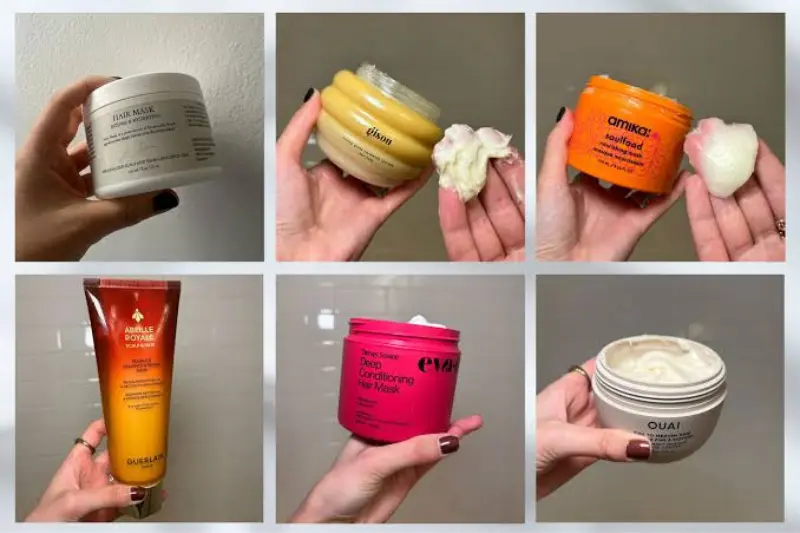
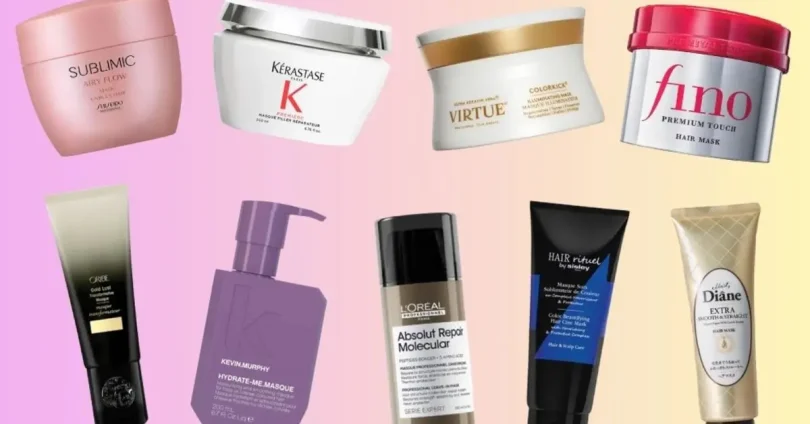
Here are ten popular hair masks and treatments to consider based on your hair concerns, budget, and preferred ingredients.
1. Olaplex No. 3 Hair Perfector
Olaplex No. 3 Hair Perfector is a pre-shampoo treatment designed for hair that has been weakened by coloring, bleaching, and other damaging processes.
It may be a good option if your hair feels fragile after repeated chemical treatments or frequent heat styling.
Benefits:
- Helps improve the appearance and manageability of damaged hair.
- Supports a hair care routine for chemically treated strands.
- Can make hair feel smoother and easier to handle.
Best for: Bleached, colored, and chemically treated hair.
2. K18 Leave-In Molecular Repair Hair Mask
K18 Leave-In Molecular Repair Hair Mask is a leave-in treatment designed for hair affected by bleaching, coloring, and other damaging processes.
Unlike traditional rinse-out masks, it is applied according to the manufacturer’s instructions and left in the hair.
Benefits:
- Offers a specialized treatment for chemically damaged hair.
- Helps improve the feel and manageability of weakened strands.
- Fits into a simplified hair care routine.
Best for: Hair damaged by bleaching, coloring, or chemical services.
3. SheaMoisture Manuka Honey and Mafura Oil Intensive Hydration Hair Masque
If your hair feels extremely dry, thick, or difficult to detangle, this rich conditioning masque may be worth considering.
It is designed to provide intensive moisture and conditioning, making it especially appealing for people with curly or coily hair.
Benefits:
- Helps soften dry hair.
- Improves manageability and detangling.
- Provides rich conditioning for moisture-deprived strands.
Best for: Thick, curly, coily, and dry hair.
4. Garnier Fructis Hair Food Banana
Garnier Fructis Hair Food Banana is a conditioning product designed for dry hair. Depending on the version available in your country, it may be used as a conditioner, hair mask, or leave-in product.
It can be a practical option if you want to improve your hair’s softness without spending too much.
Benefits:
- Helps condition dry hair.
- Can improve softness and smoothness.
- Offers a convenient option for a regular hair care routine.
Best for: Dry, dull, and slightly rough hair.
5. L’Oréal Paris Elvive Total Repair 5 Hair Mask
L’Oréal Paris Elvive Total Repair 5 products are designed for hair that shows signs of damage, including dryness, roughness, and breakage.
A suitable mask from this range may help make your hair easier to comb and style.
Benefits:
- Helps smooth rough hair.
- Improves softness and manageability.
- Can help reduce tangling during brushing.
Best for: Brittle, tangled, and damaged hair.
6. Briogeo Don’t Despair, Repair! Deep Conditioning Mask
Briogeo Don’t Despair, Repair! is a deep conditioning treatment designed for dry, damaged hair that needs additional moisture and conditioning.
It may be useful if your hair feels rough after frequent styling or exposure to environmental stress.
Benefits:
- Provides intensive conditioning.
- Helps improve softness and manageability.
- Supports a routine for dry, fragile hair.
Best for: Dry, fragile, and frequently styled hair.
7. Amika The Kure Intense Bond Repair Mask
Amika The Kure Intense Bond Repair Mask is designed for hair that feels weakened or damaged by heat styling, coloring, and chemical treatments.
It combines conditioning with a damage-focused approach to hair care.
Benefits:
- Helps improve the feel of damaged strands.
- Supports softness and manageability.
- Works as an intensive treatment within a regular hair care routine.
Best for: Weakened, dry, and chemically processed hair.
8. Moroccanoil Intense Hydrating Mask
Moroccanoil Intense Hydrating Mask is a rich conditioning treatment designed to improve the softness and manageability of dry hair.
If your hair feels coarse or becomes tangled easily, this type of moisturizing mask may help make it easier to style.
Benefits:
- Helps improve hair softness.
- Provides conditioning for dehydrated strands.
- Makes hair easier to manage.
Best for: Medium to thick, dry hair.
9. Wella Professionals Fusion Intense Repair Mask
Wella Professionals Fusion Intense Repair Mask is designed for damaged hair that needs additional conditioning and improved manageability.
It may be helpful if your hair becomes tangled during washing or brushing.
Benefits:
- Helps smooth the hair surface.
- Improves detangling and manageability.
- Provides conditioning for damaged lengths.
Best for: Damaged, tangled, and frequently styled hair.
10. TGIN Honey Miracle Hair Mask
TGIN Honey Miracle Hair Mask is a rich conditioning treatment designed for dry hair that needs extra softness and moisture.
It may be particularly useful if your curls feel rough or become difficult to manage between wash days.
Benefits:
- Provides intensive conditioning.
- Helps improve softness and detangling.
- Supports a moisture-focused routine.
Best for: Curly, coily, and textured hair.
Note: Product formulations and availability vary by country. Always check the current ingredient list and package instructions before purchasing. The best option depends on your hair’s needs, not simply the price or popularity of the product.
How to Choose the Best Hair Masks for Damaged Hair
Before buying a hair mask, think about your hair’s condition and what you want to improve. A mask that works well for thick curls may feel too heavy on fine, straight hair.
1. Choose a Moisturizing Mask for Dry Hair
If your hair feels rough, looks dull, or tangles easily, start with a moisturizing mask.
Look for ingredients such as:
- Glycerin
- Cetearyl alcohol
- Behentrimonium chloride
- Shea butter
- Conditioning oils and fatty alcohols
These ingredients can help improve softness, reduce friction, and make hair easier to detangle.
2. Choose a Repair-Focused Treatment for Chemically Damaged Hair
If you frequently bleach, color, or chemically straighten your hair, consider a product specifically designed for damaged strands.
Some treatments contain bond-building technologies, while others rely on conditioning ingredients or proteins. These products may improve the feel and manageability of damaged hair, but they cannot completely reverse every type of damage.
3. Consider Protein Treatments for Weak Hair
Protein-containing products may help improve the feel of certain damaged strands. Ingredients to look for include hydrolyzed keratin, hydrolyzed wheat protein, and hydrolyzed rice protein.
However, you do not necessarily need a protein treatment every week. If your hair starts feeling stiff, rough, or less flexible, reduce your use of protein products and try a more moisturizing formula.
4. Choose a Lightweight Mask for Fine Hair
Fine hair can become flat or greasy when you use a heavy hair mask. Look for lightweight conditioning formulas and concentrate the product on your mid-lengths and ends.
Start with a small amount and adjust according to how your hair feels after washing.
5. Pick a Rich Mask for Curly or Coily Hair
Curly and coily hair often benefits from extra conditioning because dryness and tangling can make it more difficult to manage.
A rich mask may help improve softness and make detangling easier. Choose a product that provides enough moisture without leaving your hair coated or weighed down.
Best Hair Mask Ingredients for Different Types of Damage
Use this table as a quick guide when comparing hair masks.
| Hair concern | Ingredients or treatments to consider |
| Dry, rough hair | Glycerin, fatty alcohols, conditioning agents |
| Bleached or colored hair | Bond-building treatments, conditioning masks |
| Brittle hair | Conditioning ingredients, suitable protein treatments |
| Frizzy hair | Conditioning agents, silicones, suitable oils |
| Curly hair | Rich conditioners, shea butter, oils |
| Fine, damaged hair | Lightweight conditioning formulas |
| Tangled hair | Ingredients that improve slip and detangling |
Always consider the complete formula rather than choosing a product based on one ingredient alone.
How to Use a Hair Mask for Damaged Hair
Using a hair mask correctly can help you get better results from your treatment.
Step 1: Wash Your Hair
Many rinse-out hair masks are designed to be used after shampooing. Clean hair allows you to apply the treatment according to its instructions.
However, some treatments are designed for use before shampooing, so check the label first.
Step 2: Apply the Mask Evenly
Apply an appropriate amount to your hair, focusing on the mid-lengths and ends, where dryness and damage are often most noticeable.
Avoid applying a heavy mask directly to your scalp unless the product instructions recommend it.
Step 3: Detangle Gently
If your mask provides enough slip, gently detangle your hair using your fingers or a wide-tooth comb.
Start at the ends and gradually work upward to avoid unnecessary pulling and breakage.
Step 4: Leave It on for the Recommended Time
Follow the instructions on the packaging. Leaving a mask on longer than recommended does not automatically improve the results.
Some masks require only a few minutes, while specialized treatments have different application instructions.
Step 5: Rinse and Protect Your Hair
Rinse out the product as directed. If needed, apply a leave-in conditioner to improve manageability.
Dry your hair gently and limit excessive heat styling to help prevent further damage.
You may also like to read this:
Leave In Conditioner vs Hair Serum: Which Is Better?
Clarifying Shampoo vs Regular Shampoo: Key Differences
Protein Treatment vs Moisture Treatment: Hair Care Guide
Best Shampoos For Low Porosity Hair: Top 7 Picks
Best Conditioners For Dry Curly Hair To Reduce Frizz
How Often Should You Use a Hair Mask?
The ideal frequency depends on your hair type, the level of damage, and the product you choose.
- Very dry or damaged hair: Start with a moisturizing mask once a week.
- Curly or coily hair: A weekly mask may help if your hair needs regular conditioning.
- Fine hair: Try a lightweight mask every one or two weeks.
- Protein treatments: Use according to the label and your hair’s response.
- Bond-building treatments: Follow the manufacturer’s recommended schedule.
If your hair starts feeling greasy, stiff, or coated, reduce the amount or frequency. You do not need to use an intensive mask every time you wash your hair.
Hair Mask vs. Regular Conditioner
A regular conditioner is designed for routine use after shampooing. It helps smooth the hair surface, reduce friction, and make detangling easier.
A hair mask is generally intended as a more intensive conditioning treatment. Depending on the formula, it may provide richer conditioning or focus on particular concerns, such as chemical damage.
You do not always need to use both products during every wash. If your hair is fine or becomes weighed down easily, a regular conditioner may be enough for most wash days, with a mask used occasionally.
Natural Hair Masks for Damaged Hair
If you prefer natural ingredients, a few household options may temporarily improve the feel of dry hair. However, homemade treatments are not as carefully formulated or tested as commercial hair care products.
Coconut Oil Treatment
Coconut oil may help reduce protein loss from hair in certain circumstances. Apply a small amount to the lengths before shampooing and wash it out thoroughly.
Start with a small quantity because too much oil can leave your hair greasy or coated.
Aloe Vera Treatment
Aloe vera is commonly used in hair care products, but strong evidence that homemade aloe treatments repair damaged hair is limited.
If you try it, use a suitable preparation and stop immediately if you experience irritation.
Avocado Hair Mask
Avocado is a popular ingredient in homemade hair masks, but evidence that it repairs damaged hair is limited. Homemade mixtures may also be difficult to rinse out completely.
A formulated conditioner or mask may provide more predictable results.
Avoid harsh DIY treatments containing baking soda or lemon juice, as they may contribute to dryness or irritation.
Common Mistakes to Avoid When Using Hair Masks
Even the best hair masks for damaged hair may not deliver the results you want if you use them incorrectly.
- Applying too much product: Excessive amounts may weigh down your hair without providing additional benefits.
- Using too many treatments together: Combining several masks, protein treatments, and repair products can make it difficult to determine what works for your hair.
- Ignoring heat damage: Frequent straightening and curling can continue to damage your hair even if you use a mask regularly.
- Brushing wet hair aggressively: Wet hair can be more vulnerable to stretching and breakage, so handle it gently.
- Expecting split ends to disappear permanently: Masks may temporarily smooth split ends, but trimming is the reliable way to remove them.
- Choosing products based only on price: A product that suits your hair needs may work better than a more expensive mask designed for a different hair concern.
Tips to Prevent Further Hair Damage
A hair mask is only one part of a good hair care routine. A few simple changes can help protect your hair over time.
- Reduce frequent heat styling and use a heat protectant when applying heat.
- Avoid repeatedly bleaching or chemically treating the same lengths.
- Use a suitable conditioner after shampooing.
- Detangle gently, especially when your hair is wet.
- Avoid tight hairstyles that place repeated tension on your hair.
- Protect your hair from excessive sun exposure when practical.
- Trim split ends when needed.
- Choose a shampoo that cleans your scalp without leaving your hair excessively dry.
If you experience sudden hair loss, persistent scalp irritation, or unusually severe breakage, consider consulting a dermatologist. A hair mask cannot address every underlying cause of hair problems.
Conclusion
Choosing the best hair masks for damaged hair starts with understanding what your hair needs. If your strands feel dry and rough, a moisturizing mask may be the right choice. If your hair has been bleached or chemically treated, consider a specialized repair-focused treatment. Curly and coily hair may benefit from richer conditioning formulas, while fine hair often does better with lightweight products.
You do not need to buy every product on this list. Start with one suitable mask, follow its instructions, and maintain a gentle hair care routine. With consistent conditioning and fewer damaging styling practices, your hair can become softer, smoother, and easier to manage.
Frequently Asked Questions About the Best Hair Masks for Damaged Hair
1. What are the best hair masks for damaged hair?
Some popular options include Olaplex No. 3 Hair Perfector, K18 Leave-In Molecular Repair Hair Mask, SheaMoisture Manuka Honey and Mafura Oil Intensive Hydration Hair Masque, and Garnier Hair Food Banana. The best choice depends on whether your hair needs moisture, conditioning, or specialized care for chemical damage.
2. How often should I use a hair mask for damaged hair?
Most people can start by using a moisturizing hair mask once a week. If your hair is fine or easily weighed down, try using it every one or two weeks. Always follow the product instructions and adjust the frequency according to your hair’s needs.
3. Can hair masks repair damaged hair permanently?
Hair masks can improve softness, smoothness, and manageability, but they cannot permanently reverse all hair damage. They may help reduce friction and breakage, while split ends generally need to be trimmed.
4. Which hair mask is best for dry and damaged hair?
A moisturizing hair mask containing conditioning agents, glycerin, or suitable oils may help dry and damaged hair feel softer. Moroccanoil Intense Hydrating Mask and SheaMoisture Manuka Honey and Mafura Oil Intensive Hydration Hair Masque are two options to consider.
5. Are hair masks good for chemically treated hair?
Yes, hair masks can help improve the condition and manageability of chemically treated hair. If you frequently bleach or color your hair, consider a treatment specifically designed for chemical damage and follow the manufacturer’s directions.